EFFIGY IN A COUNTRY CHURCH

On top of his tomb his effigy lies,.

His bones beneath, are all that remains of the once brave knight.

His deeds if any are all forgotten, his face in stone

is probably that of any old knight,

so we don’t even know how he looked.

The council’s more bothered about the roof.

The lead’s been looted to sell to the tatters.

The wood’s got beetle; there’s damp in the walls

And the mice have got at the hassocks again.

The number’s are down just the regular few

A baker’s dozen if you count Sir Hugh

But he doesn’t have a great deal of choice

He’s been there five hundred years.

Posted in Uncategorized | Leave a comment

Just a short poem

I was in the Cosy Club restaurant in Coventry a few months where I saw a portrait, one among many used as decoration. This one was a bit different to the others as it was a man in modern dress, in what appeared to an academic robe. So I wrote a poem about him.

SIC TRANSIT…….

He was an important fellow surely,
Much loved by all who knew him.
His portrait hung in a prominent place
so, his notable life be not forgotten.

There wasn’t the money for anyone famous;
A young man was found to do the job
of painting the old man before his retirement
so, his notable life be not forgotten.

New men came after, with modern ideas.
The great hall replaced by a self-service bar.
Portraits thought dreary were sold off quite cheaply
so, his notable life was soon forgotten.

Now his portrait hangs on a restaurant wall
and nobody knows who he was at all.

Posted in Uncategorized | Leave a comment

Why I don’t want to fly

Anxious eyes stare up at the indicator boards. Is my flight there yet? Queues of cases shuffle forward their owners panicking about forgotten passports as they heft heavy bags onto the scales. Is it too heavy? Have I packed any knickers? More queueing! This time at security. Who doesn’t feel guilty in front of a uniform?  Off with my belt; will my trousers stay up? Did I remember to pack my Leatherman in my case not my cabin bag? Will I set off the metal detector? Will I get through in time for my flight? Then the labyrinth of duty free. Is it cheaper than the ‘high street’? Will I be rooked? At the ‘gate’ are regimented rows of seats lined up as though they too are waiting.

An airport terminal might be designed to promote anxiety, an ordeal to be undergone before a holiday is awarded. This one is clean, the floor swept clear of litter, even the loos are pristine.

Where can all these people be going whoever they are? The holidaymakers are easily identified, scantily clad, fractious, with mewling kids in tow. The suited brief-cased businessmen heading for important meeting in Geneva intent on open laptops. The student backpackers in jeans and T-shirts bound for the adventure of diarrhoea in Delhi.

It is a non-place, one where all within wish they weren’t. I wouldn’t be an airport terminal; who’d want to be quite that unloved?

Posted in Uncategorized | Leave a comment

Another New Year!

january-calendar

Today is the first day of the year 2017 AD or would be if political correctness did not dictate that is should be called  2017 CE, the two letters standing for “of the Christian Era”. It seems that the longstanding “AD”,  in the “Year of Our Lord” might be upsetting to our non-Christian compatriots, who probably couldn’t care less! This is notwithstanding the  uncomfortable truth is that the Christian Era can hardly have started with the birth of Jesus Christ, a Jewish child to a Jewish family that in any case appears now to have been in around 4 AD/CE. A more credible date for the commencement of the Christian Era would be the calling of the first Council of Nicaea by the Emperor  Constantine some 325  years later at which the familiar creed of that name was formulated as the core of Christian belief, but this would make the year starting today 1692 and we would be looking forward to the massacre of Glencoe and perhaps more pertinently the Salem Witchcraft Trials!

This is the year in which we find out what “Brexit” means, other than of course as we all know, because Mrs. May told us, that it means “Brexit” which must count as one of the most absurd political statements of all time! Apparently it comes in two consistences, hard and soft. We cannot start to negotiate the terms until “Article 50 Day”, except that the government can hardly trigger this until it has negotiated the terms, which hopefully it has been doing frantically for the last few months! The whole point about Article 50 is that it is deigned never to be used!

A small majority of those who voted in the referendum chose to leave the European Union which it seems makes it mandatory for the government to take Britain out of the EU, whether or not this is a wise decision. “Vox Populi………….”  A similar small majority in the USA voted to elect Mrs Clinton as president, but this apparently does not mean that she gets the job. Instead by the machinations of an “Electoral College” it goes to her rival Mr Trump! Democracy on each side of the Atlantic seems to have different meanings! But at least in America the people will after four years have an opportunity to change their minds, the people of Britain may find that more difficult. Perhaps another consistency should be sought: “Elastic Brexit”, which would enable a future wiser and stronger government to take Britain back into the EU, while preserving the Cameron Concessions.

Posted in Brexit, Economy, Political Correctness | Tagged | Leave a comment

A Golden Age?

Bullion

Those of my generation, born during the war years, lived through a Golden Age, a period of peace, and though we did not perhaps realise it at the time, one of relative and rising prosperity. On a teacher’s salary my parents could own their home and educate me outside the state system though at the price of foregoing car ownership. From a fee paying grammar school the route was easy to University, free of tuition fees and with an ample Local Authority grant for living expenses; no student loans for us! And then a job for life with a publicly owned utility and an index linked final salary pension.

The years after 1945 saw the cold war, an uneasy period of peace between nations with the world divided into Eastern and Western spheres of influence, dominated respectively by the USSR and USA. By tacit agreement neither trespassed on the territory of the other, though there was some testing of boundaries and each policed their own empire. Borders were occasionally tested as  in Korea and in Vietnam, but the nuclear deterrent prevented outright conflict for nearly fifty years. Not since the days of my great grandfather had there been such tranquility in the world

These years, free of costly conflict were a time of rising prosperity in both West and East, each according to their own economic systems. Britain despite the crippling overhang of costs from the war, and the perhaps unwise decision to repay debt to America participated in this, with steadily rising wages and salaries and an eventual abundance of consumer goods on which to spend them. Those who in 1946 had endured bread rationing could now buy a computer! Jobs were easy to find in the mid-sixties and I chose one the three offered, in a state owned utility company, where I remained until retirement, progressing up the promotion ladder to a modest level. Pension contribution was then compulsory, but brought the benefit of final salary salary linked pension indexed to inflation.

A Golden Age by anyone’s standards? But was it?

It was also a time of social disintegration, the camaraderie of the war years giving way to a “consumer society”. The urban villages of the heavy industrial age being replaced by the suburban housing estates, materially far superior, but socially divided. Villages of geographical proximity and physical dependence of the “Coronation Street” years being replaced by villages of common interest, such as sport, or music. The term “social isolation” was coined and the care or the old became a burden on society, rather than a duty of the young.

Stress at work tended to arise from lack of challenge, and very often lack real purpose; many well of the well qualified felt unfulfilled and under utilised.

Life lost much of its adventure, times were easy for the professional class; jobs were for life backed by the “cradle to grave” social care system. My father’s generation and my grandfathers fought wars, faced horrendous risks; mine saw the rise of the “health and safety” obsession which has it seems rendered us a timid generation, afraid to let our children play outside lest they be molested or become casualties of our ever safer roads. Risk, little understood,  has to be avoided at all costs, even the cost of our liberty. The purchaser of a single lottery ticket is more likely to become a millionaire than be killed in a terrorist outrage, but we docilely surrender political liberty and our privacy to avoid even this minimal risk.

A Golden Age, well maybe not twenty-four carat!
Posted in Economy, Education, Health | Tagged , , | Leave a comment

Street MarketWe  hear a lot today about “the free market economy”, so much in fact that it may be worth reminding ourselves that a free market has defining characteristics without which while still a way of distributing assets it cannot be called free or possibly not even a market. First, the goods for sale must be sufficiently similar to be substitutes for each other; apples might be bought in place of pears bur not a chair in place of a pair of trousers. Secondly there must be complete knowledge by all buyers and all sellers of all prices obtained for all goods.

A street produce market is a near approximation, where if Jacques reduces the price of apples as one end of the street, Pierre a hundred metres away will know and be able to respond within minutes, the information being carried by sellers directly or by their actions in favouring Jacques’ apples over those of Pierre, assuming equal quality, hence substitutability. Pierre may respond by reducing his prices whereupon it will be Jacque’s turn to react. Thus buyers’ apple requirements will be satisfied at the lowest “possible” price, constrained by the need for both sellers to make a profit over a reasonable length of time. One of our two producers may be persuaded to find a better, hence cheaper, way of bringing his produce to market enabling him to undercut his competitor for a significant period. Money will flow to him enabling even more improvement or an increase in production with possible further reductions in price to the benefit of all. Assets will be distributed to the producer best able to use them and prices will be kept low by competition.

In the larger world the equity market is close to being a free market. Share prices are published daily and known to participants by the second. In theory assets flow to the efficient by an increase in company value; the inefficient lose value and the ability to raise capital for expansion and in the extreme may not be able to purchase their needs and therefore have to cease trading.

Imperfections reduce the ability of the market to provide low prices and advantageous distribution of assets. The UK market in domestic gas for example does not function well, as consumers do not know what price their neighbour is paying, indeed, deliberate obfuscation in the tariff structure may mean that they do not even know the price they themselves are being charged. Sellers do their best to keep buyers in ignorance of prices, so that they cannot move to the cheapest. In a market such as this where the companies supply the same product through the same pipes to the same customers it is doubtful whether any real competition can exist. Efficiency it would appear is outside the control of the suppliers.

No system involving secret tenders can be a fee market for the obvious reason that prices are deliberately concealed so that sellers cannot compete with each other, the intention being that they are prevented from colluding  to fix the price at a high level though in reality the lack of transparency makes price fixing more likely. Auctioning a contract to the lowest bidder might be a better method so that the prospective contractors compete. Fixed price secret tendering is greatly favoured in the UK public sector and almost certainly raises costs in services such as health, infrastructure projects, and provision of rail services, recently in the news.

In the British National Health Service the confusion goes even further! Politicians to distance themselves from difficult decisions as to what services should be provided and which not, have introduced a “market system” which they tell us will enable “money to follow the patient”. It should be remembered that by its very nature the NHS is not a market. It is a service provided from general taxation. In its present form the NHS is unaffordable but certainly will not be made so by the introduction of “business systems” of baroque complexity.

Posted on by fluter1 | Leave a comment

Relativism Unrestrained!

When I was a child I was told that it was easy to judge music. “Great music” was written by “great composers” who were all male, German and dead! Great composers wrote symphonies, lesser ones didn’t, so while Beethoven was undoubtedly “great” Grieg was less so as his inspiration went merely as far as a concerto, and only one of those! Being Norwegian he could be considered an honorary German, well, at least he wan’t English!

Dance music and jazz were of course at best “rubbish” if not actually evil. This was another aspect of musical judgement in my childhood years, the attachment of moral values to music, and to the arts in general even as far as ascribing vice or virtue to individual instruments! I have read that at an early performance of Job by Vaughan Williams the use of the saxophone was forbidden by cathedral authorities at the three choirs festival, on the basis of its association with “low” music. How times have changed: Gerard McChristal, saxophone virtuoso, has a concert all to himself at this year’s event.

The musical establishment had a problem with “modern music”. It was undeniably intellectual which made it “good” but nobody liked it, so no one went to its concerts. William Glock at the BBC espoused the cause of serialism safe behind his license fee from any tawdry need to entertain and there were of course mavericks who just didn’t fit into any of the neat categories, beloved of critics, notably Benjamin Britten who wrote “good” music, not serial and widely enjoyed, going his own way, ignoring completely the tyranny of fashion. He did write one symphony but it wasn’t a “proper” one, with too much singing to really qualify though his operas perhaps qualified him as an honorary “great”

Now its a free for all and all are equal. Who dares to suggest that any kind of noise however banal or even unpleasant cannot rank beside the “great composers”? Our “quality newspapers” solemnly review “rock” as though it were some kind of art form rather than an extremely popular form of dance music. Serious music has hidden itself in the minimalists folds of trite new clothes whose existence only the bravest critic will deny. It took a daring heroine of a regional newspaper to  describe a concert by a minimalist darling as “mere doodling at the piano” which is exactly what it was!

I was taught, a little later than childhood, that the art of writing a successful essay consisted in the ability to take an intellectual position on a topic then defend it by reasoned and informed argument. How would one dare write an essay today? Is that why I haven’t?

Posted in Education, Music, Orchestra, Uncategorized | Tagged , | Leave a comment

My flute has reeds too!

A rack of reeds

Flute Reeds!

 Has anyone had the irritating experience of sitting next to an oboist suffering from an attack of “reed fidgets”?   He removes his reed from the instrument at even the briefest opportunity, prods it, squeezes it, attacks it with a vicious looking knife, even occasionally punishing the offending bamboo sliver by imprisonment in its box before choosing a new victim to undergo the same treatment?

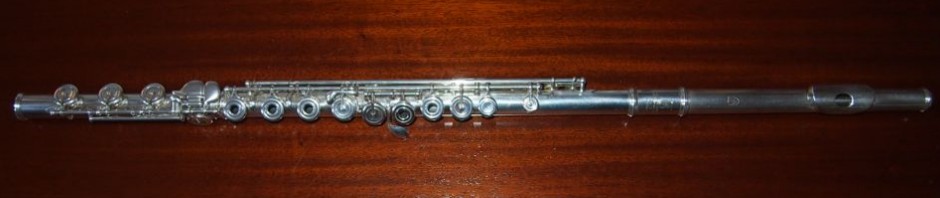
Some years ago I commenced serious study on the saxophone and became initiated into the world of reeds but resolving never to become a “fidget”. It was hard. On some days the errant cane fragment was stuffy, on others buzzy, occasionally “thin”, even “blarey” However I stuck to my resolve and the reed with which I’d started the session. Then it occurred to me that I have exactly the same experience with my flute! Some days it is rough, others thin and feeble and even occasionally perfect! So my flute has bad reed days too!

I wonder has anyone an explanation for this strange phenomenon.

Oh, and another thing. The state of the reed, flute or otherwise seems to be a secret between player and instrument. I will sometimes say to my wife “Doesn’t this reed sound horribly buzzy?” Only to be met by a blank look of complete incomprehension!

Posted in Music, Orchestra | Tagged , , | Leave a comment

A Raspberry for Schools

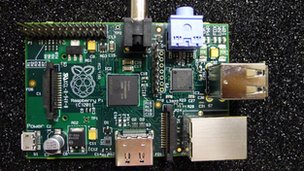
Today sees the launch of a tiny new computer, called with maybe tongue in cheek, the Raspberry Pi, tiny and without screen or keyboard, it has one characteristic lacking in almost every desktop: it can be programmed! Yes, it can be used for developing code a skill derided for many years by the British educational establishment wedded to the the notion that Information Technology meant learning to use such as Microsoft Word or Excel and of course the Internet, blithely ignoring the fact that functional proficiency in most commercial packages could be achieved in  few hours by those with average intelligence. Ironically the one group with no need to be taught the use of the Internet was that likely to be in schools! Erica, my late first wife campaigned long and hard back in the eighties to keep programming in schools.

That was the era of the BBC Micro and the ZX Spectrum, also tiny by modern standards and both entirely programmable by the user. Since then computers have become progressively more sophisticated and in doing so the coding has been increasingly hidden from the user, so much so that it is now largely invisible. How many Excel users of today are aware that the package could be programmed by the use of what used to be call “macros”? At that time there was a generation of youngsters who bought these primitive devices, played the games provided with them, then found that the could alter them, only a short step from the realisation that they could develop their very own games, which of course is exactly what they did!

Was the educational world delighted by this development, excited that children had found their own way of learning quite advanced mathematics, without of course knowing they did so? No they were not! The atmosphere among teachers faced with this child-led revolution, was simple fear! This was something they did not understand and were unfortunately unwilling to put in the effort needed to learn. So we had “computer assisted learning” and that was the only permitted use for computers in the classroom. The dead hand of the school system yet again turned a fascinating subject into drudgery and tedium. Politicians were equally timid; for many of them “advanced mathematics” meant such some arcane piece of arithmetic history such as “long division”!

So the most glorious opportunity offered to educationalists in a century was thrown away and thee generations of schoolchildren were given to think that IT was about typing documents or doing accounts.

But now, maybe too late, an enlightened minister has realised that in the country which invented the computer the principles behind it are no longer taught leading to the danger that we will be left behind in a changing world. Michael Gove wants to bring coding, hitherto an dirty word, into the classroom. The Raspberry is a potential vehicle for that. Significantly maybe, its programming language, Scratch is American!

Posted in Education | Tagged , | Leave a comment

Democracy at a price?

So, the Greek parliament passed the latest batch of “austerity” measures, imposed on them by their creditors, to the accompaniment of looting and burning on the streets of Athens, as the Greek people loudly objected to the reduction in their living standards these impose on them. But has this not been the story of the European Union ever since its founding by those idealists who intended it as a guarantee that there would never be another war in Europe? At no time did the politicians consider whether they were carrying the Europeans peoples along with them? They failed to do that.

The people of Germany no more want to pay for what they see as the profligacy of the southern Europeans than the people of those countries want the effects of the conditions that go along with the repeated “bail out” packages. Eurocepticism has acquired respectability in the UK by being continuously espoused by on or other of the political parties, a luxury not afford to the populations of most of continental Europe whose only way of expressing their disapproval has been to do so on the streets of their cities.

Parliamentary democracy is a condition of EU membership that some aspirant nations struggle to meet, but that democracy should not be abandoned when it becomes inconvenient as  in Greece and Italy with their “technocrat” prime ministers and cabinets.

In the UK the appearances of democracy have been better maintained, and and while rioters of last summer in British cities would probably not be capable of articulating any sophisticated political justification for their actions,  this unrest expressed well the  sullen anger that comes from being constantly ignored, or worse being subjected to repeated spurious “consultation” processes that have a chance of changing policy close to zero. Governments Greek, British or German may ignore the views of their populations but only for so long!

Posted in Uncategorized | Tagged , | Leave a comment